



Compliance
Compliance (regulatory compliance) means conforming to comply with relevant laws and regulations. Together with KYC Spider in Zug Eurospider has in-depth compliance know-how.
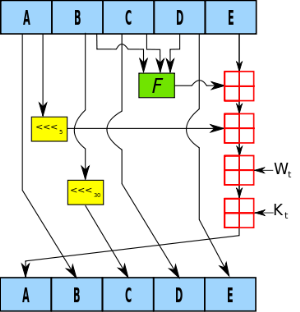
Hash functions such as SHA-1 are crucial in digital business (f.e. fintech) to produce a small piece of text (the digest) from a larger document. This digest is then a unique representation of the document. No two different documents should have the same digest.

The EU’s new General Data Protection Regulation comes into effect on May 25, 2018. The preliminary draft of the complete revision of the Federal Act on Data Protection (FADP) has already been published. In both cases, compliance duties and sanctions for non-compliance will be increased. From a technical vantage point, Knowledge Management not only increases innovation, but is also useful in meeting the regulatory duties and minimizing risk. How do you combine the unpleasant with the useful?

In a previous contribution we touched on the risk-based approach. However, it is not only risk that has to be evaluated correctly but also processes. Social research has investigated how errors are introduced into such evaluations.
Bad quality master data increases the probability of missed hits; for instance, when matching customer names against names of politically exposed persons (PEP), relevant hits may be missed due to character encoding problems.
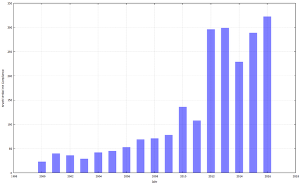
The word Compliance is not a headword in the Duden. Wahrig shows compliance only as a medical term, and not in the sense of regulatory compliance; i.e. complying with relevant laws and regulations. Nevertheless, German media have used the word “compliance” frequently sinse 2012.
Data Protection Act
The Swiss Data Protection Act underwent a complete revision in 2020, and its new version took effect on September 1, 2023, along with the new Data Protection Ordinance (DPO). The revision itself is complete, but its practical application continues to evolve. The topic of AI is particularly relevant: On May 8, 2025, the FDPIC confirmed that the DPA is technology-neutral and applies directly to all AI applications. In practice, this means, among other things, that users must know whether they are interacting with AI (transparency requirement, Art. 19), and that a data protection impact assessment is mandatory in cases of high risk—such as profiling or facial recognition (Art. 22). The Federal Office of Justice (FOJ) is drafting a consultation document on AI regulation to be completed by the end of 2026. With this, Switzerland will implement the Council of Europe's AI Convention.
