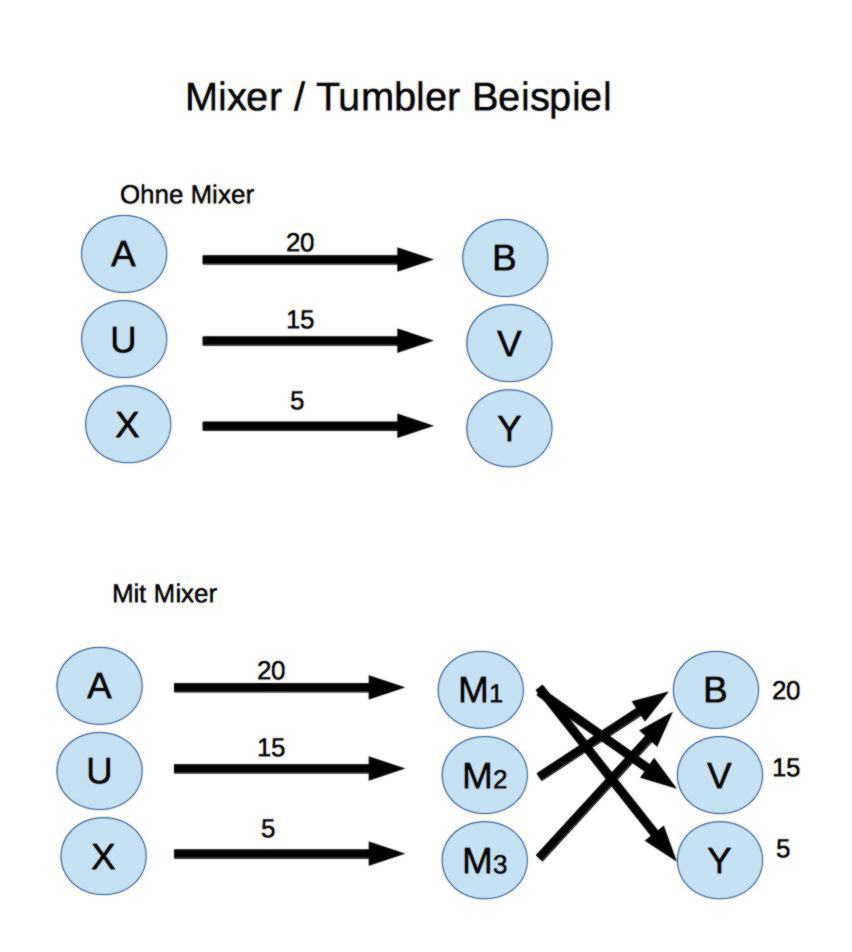




What is a cryptocurrency mixer?
Thanks to the blockchain, cryptocurrencies such as bitcoin and ether feature a publicly visible register of all transactions. This means that all cashflows are traceable. Mixers – or tumblers, as they’re also known – increase anonymity, as we explain below.
The role of a mixer
A mixer (or tumbler) is a service that mixes different streams of potentially identifiable cryptocurrency. This improves the anonymity of transactions, as it makes bitcoin harder to trace. The bitcoin owner transfers the money to the mixing service, which mixes it with that of other users and transfers the mixed currency to the desired address, meaning there is no connection between the original transaction and this address. The transaction amounts can be chosen at random so that the transaction is made up of many small partial payments spread over a longer period of time. The mixing service usually charges a fee of between 0.25 and 3% of the amount to be mixed.
Dirty bitcoin
The user receives bitcoin from other users during this process. This means that they run the risk of receiving ‘dirty’ bitcoin, which, for example, has been used for illegal activities and could now connect them to these activities. Mixing services are also used by criminals; for example, to launder stolen money. In some jurisdictions, mixing is therefore illegal under anti-structuring laws.