

Structured programming and compliance processes

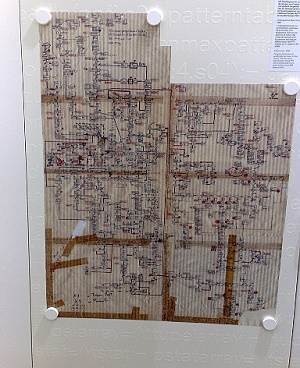
Fifty years ago, computer scientists bid goodbye to confusing spaghetti code. Complicated top-down process diagrams were replaced by smaller, clearer sub-programs (procedures) based on Hoare and Wirth's ideas. Today, unfortunately, diagrams resembling the old data flowcharts displayed in the Bern Museum of Communication proliferate in compliance departments, frequently printed on A3 or even A2. While these compliance process diagrams may look impressive and intellectual, they’re unfortunately complicated and error-prone, like the old data flowcharts.

Image: A flow chart of the program used by PTT in 1968 to process phone bills on an IBM 1401

LINKS:https://en.wikipedia.org/wiki/Structured_programming

Data Protection Act

The Swiss Data Protection Act underwent a complete revision in 2020, and its new version took effect on September 1, 2023, along with the new Data Protection Ordinance (DPO). The revision itself is complete, but its practical application continues to evolve. The topic of AI is particularly relevant: On May 8, 2025, the FDPIC confirmed that the DPA is technology-neutral and applies directly to all AI applications. In practice, this means, among other things, that users must know whether they are interacting with AI (transparency requirement, Art. 19), and that a data protection impact assessment is mandatory in cases of high risk—such as profiling or facial recognition (Art. 22). The Federal Office of Justice (FOJ) is drafting a consultation document on AI regulation to be completed by the end of 2026. With this, Switzerland will implement the Council of Europe's AI Convention.

Eurospider Information Technology AG
Winterthurerstrasse 92
8006 Zürich


Cookies make it easier for us to provide you with our services. With the usage of our services you permit us to use cookies.
More information Ok Decline