



Compliance
Compliance (regulatory compliance) means conforming to comply with relevant laws and regulations. Together with KYC Spider in Zug Eurospider has in-depth compliance know-how.

On June 18, 2026 the KYCwallet was presented for the first time at the fourth Open Banking Project Workshop, and it is expected to fundamentally change the way we think about and use digital identity.
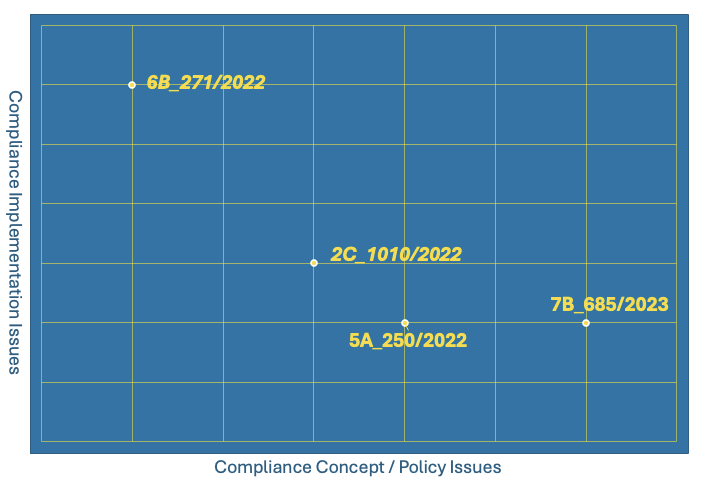
In the past year (2024), the Swiss Federal Court issued several rulings on money laundering and financial offenses, emphasizing important aspects of the due diligence obligations of banks and financial intermediaries.

At the 11th member event of the Open Banking Project, our IT specialist Adriano Meyer presented the current trends in the KYC sector. He gave an interesting presentation on the digital onboarding of customers.

“You have to be adaptable and open to adjustments”, said Simonetta Sommaruga, President of the Swiss Confederation, on August 12, 2020 at the press conference held by the Federal Council [1]. This not only applies to combating the COVID-19 pandemic, but also to combating money laundering. We’ve identified a few issues with the false report about an alleged coronavirus death [2] which are also relevant for compliance.

Some time ago, we posted an expert article about compliance and game theory. Several readers may have wondered what compliance has to do with gaming. Game theory belongs to the realm of mathematics and economics. The term is a misnomer because modern game theory does not focus on board games and the like. “Strategic interaction theory” or “strategic conflict theory” would be more accurate descriptions.
Data Protection Act
The Swiss Data Protection Act underwent a complete revision in 2020, and its new version took effect on September 1, 2023, along with the new Data Protection Ordinance (DPO). The revision itself is complete, but its practical application continues to evolve. The topic of AI is particularly relevant: On May 8, 2025, the FDPIC confirmed that the DPA is technology-neutral and applies directly to all AI applications. In practice, this means, among other things, that users must know whether they are interacting with AI (transparency requirement, Art. 19), and that a data protection impact assessment is mandatory in cases of high risk—such as profiling or facial recognition (Art. 22). The Federal Office of Justice (FOJ) is drafting a consultation document on AI regulation to be completed by the end of 2026. With this, Switzerland will implement the Council of Europe's AI Convention.
