

Qualitative methods produce information only on the particular cases studied, and any more general conclusions are just hypotheses. Quantitative methods aim at the systematic empirical investigation of observable phenomena. In compliance, quantitative methods are usually adopted to periodically check the customer base. The results are hypotheses for certain risks that can be verified by qualitative methods for the particular cases.
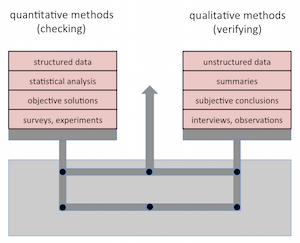
Compliance Methode

The scale above illustrates that qualitative and quantitative methods are different approaches that complement each other. It should be taken into account that in jurisprudence - i.e. the background of many compliance officers - qualitative methods dominate.

Links:

Data Protection Act

The Swiss Data Protection Act underwent a complete revision in 2020, and its new version took effect on September 1, 2023, along with the new Data Protection Ordinance (DPO). The revision itself is complete, but its practical application continues to evolve. The topic of AI is particularly relevant: On May 8, 2025, the FDPIC confirmed that the DPA is technology-neutral and applies directly to all AI applications. In practice, this means, among other things, that users must know whether they are interacting with AI (transparency requirement, Art. 19), and that a data protection impact assessment is mandatory in cases of high risk—such as profiling or facial recognition (Art. 22). The Federal Office of Justice (FOJ) is drafting a consultation document on AI regulation to be completed by the end of 2026. With this, Switzerland will implement the Council of Europe's AI Convention.

Eurospider Information Technology AG
Winterthurerstrasse 92
8006 Zürich
