




Crypto transactions
Blockchains are the medium for numerous crypto transactions. How do these relate to traditional transactions using fiat currencies? According to [1], over 200,000 bitcoin transactions were carried out in recent months.
Bitcoin and SWIFT
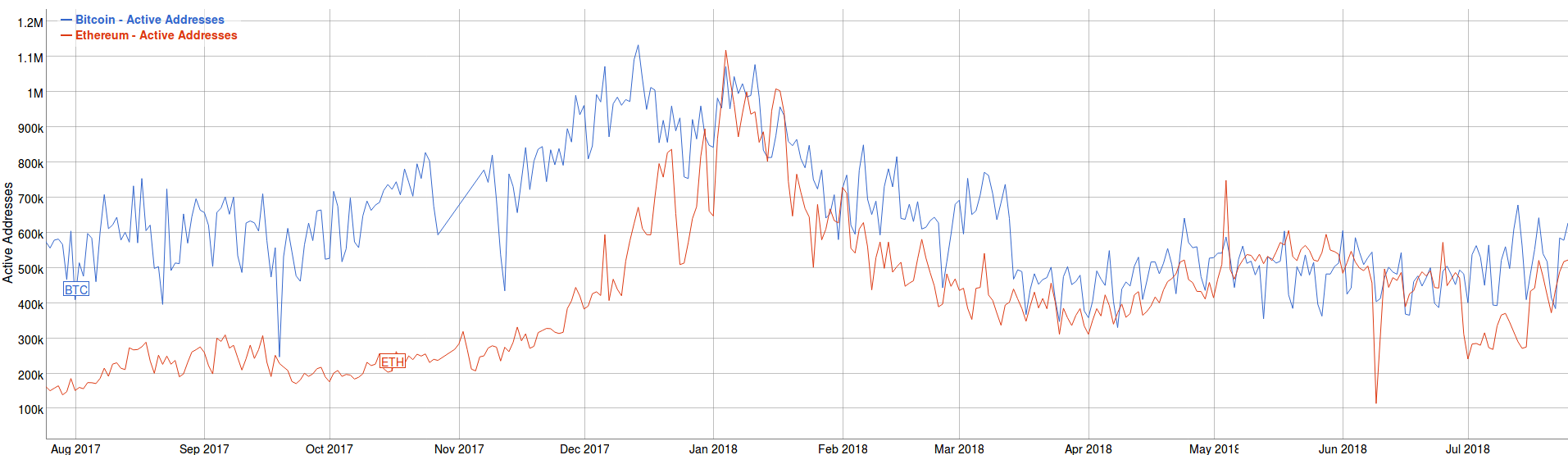
That’s not much compared to the 30 million SWIFT transactions carried out each day [2]. The difference in volume is even greater: according to [3], the value of bitcoin transferred in 24 hours is USD 6.8 billion. That’s around 1,100 times less than the value transferred via SWIFT during the same time period [4]. The blue line in Figure 1 shows the number of bitcoin addresses used per day. A repeating pattern is visible: the number of addresses used rises at the beginning of the week and falls again at the weekend.
Addresses per day
Etherum and SWIFT
Ether presents a somewhat different picture: thus far in 2018, an average of 776,411 ether transactions per day has been registered [5]. On June 25, the market volume over the past 24 hours was USD 2.1 billion [6]. Less money is transferred in comparison to bitcoin, but significantly more transactions take place. Compared with SWIFT transactions, however, the volume remains small. The red line in Figure 1 shows the number of active ether addresses. Since the beginning of the year, the number of ether addresses used each day has approached that of the bitcoin blockchain. The number of ether transactions during the week is also higher than at the weekend.
Sources
- www.blockchain.com/charts [25.07.18]
- www.swift.com/about-us/... [25.07.18]
- coinmarketcap.com/currencies/bitcoin [25.07.18]
- de.wikipedia.org/wiki/SWIFT [25.07.18]
- etherscan.io/chart/tx [25.07.18]
- coinmarketcap.com/currencies/ethereum [25.07.18]
