



Statistics and compliance

Aspiring lawyers are encouraged to come to clear conclusions even in their first semester. Legal consequences take effect if all elements of the offense are fulfilled or if at least one variant of the offense is fulfilled (Seiler, 2009). This black/white logic hardly allows for considerations of probability, at any rate such things are rarely found in textbooks. This makes it even more surprising that statistical methods have found some application in law recently. There are court decisions, even landmark rulings from the Federal Supreme Court, that cite studies in which statistical tests play a role. However, it is still very unusual for a statistical test to be conducted in the course of a trial.
Chi-squared test
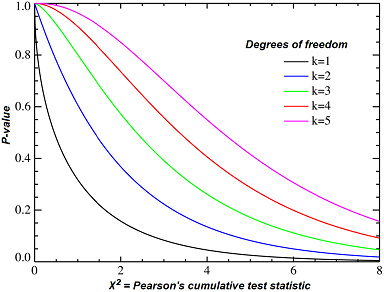
In a ruling from November 10, 2003, the Fiscal Court of Münster used the chi-squared test and considered the result to be a strong indication of accounting manipulation. Using a statistical test, you calculate the probability of a null hypothesis, which is the opposite of whatever you would actually like to show. If this probability is low, for example less than 5%, you can discard the null hypothesis and the alternative hypothesis remains as a possibility. This indirect approach confirms the alternative hypothesis that corresponds with the desired result. If the probability of the null hypothesis is high, however, the statistical test then failed to show the hoped-for result.
Source
(Seiler, 2009) Seiler, Hansjörg ; Einführung in das Recht; 3. Auflage, Zürich; Schulthess; 2009.
